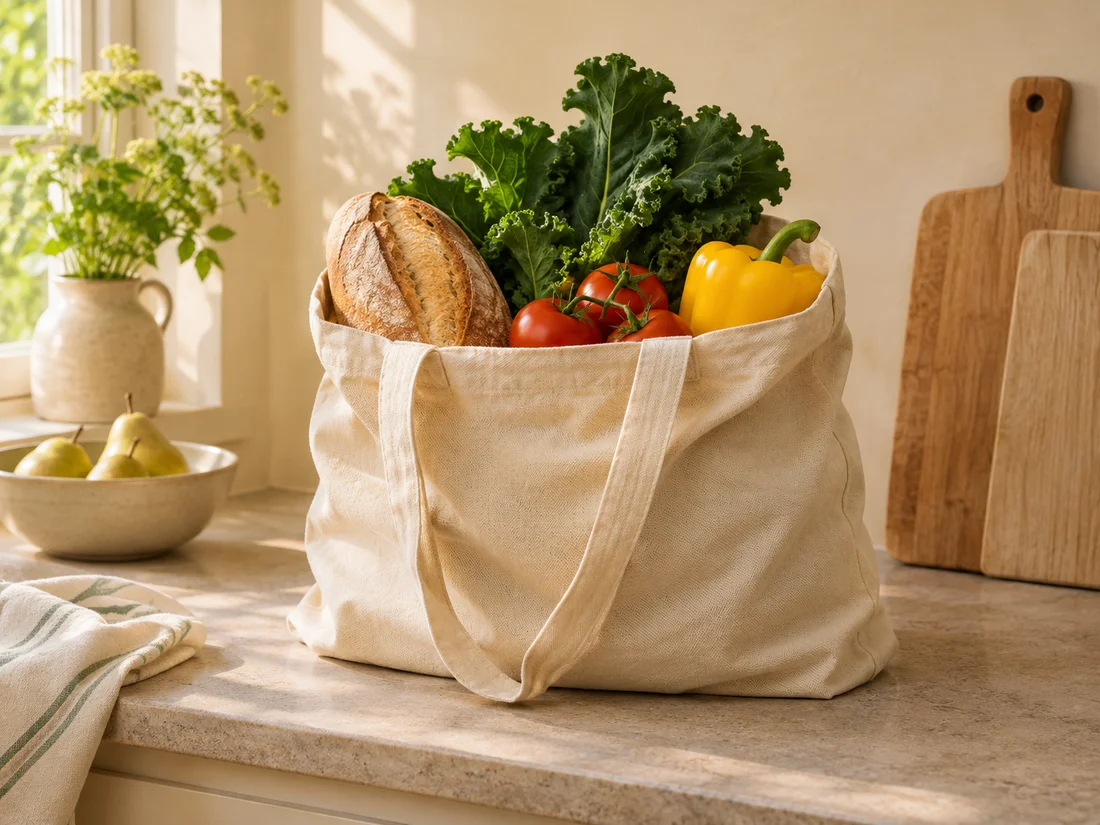
A useful grocery plan does not need a spreadsheet or a cupboard full of bulk purchases. Start with the food you already own and the meals you are likely to cook this week.
The best saving is not always a cheaper version of something. Sometimes it is not buying another bag of rice while an open one is sitting at home.
Give the kitchen a five-minute check
Before making a list, look in the fridge, freezer and cupboards. Note anything that needs using soon, then choose a few meals that share ingredients. If a recipe needs half a bag of spinach, plan another use for the rest rather than assuming you will remember later.
Leave room for the way you actually live. A week with late work evenings may need simple freezer meals, not an ambitious menu that turns into unused ingredients and takeaway orders.
Write a list with quantities
“Fruit” leaves a lot of room for an expensive shop. “Enough fruit for four breakfasts” connects the purchase to a use. The quantities do not need to be exact, but they should reflect the number of people and meals you are buying for.
Keep an easy substitute in mind: one seasonal vegetable in place of another, for example. That makes it easier to respond to prices without adding unrelated extras because they look like bargains.
Compare a consistent unit
Use the shelf’s unit price where available, or compare the same weight, volume or number of items yourself. A larger package is not automatically cheaper per unit, and a promotional pack may contain a different quantity.
Imagine a 500 g pack costing €2.40 and a 750 g pack costing €3.30. Their example unit prices are €4.80/kg and €4.40/kg. The larger one costs less per kilogram, but only makes sense if you will use it. These figures illustrate the arithmetic; they are not live supermarket prices.
For products with different strengths or serving sizes, the unit price may not tell the whole story. Compare like with like, not just the largest number on the label.
Buy the amount you can use
A multi-buy is not a saving when the extra portion ends up in the bin. Before choosing a bigger pack, ask whether you have a clear use for it, safe storage space and enough time before it spoils.
Frozen or longer-life alternatives may suit an unpredictable week, but compare the price and your cooking needs instead of assuming they always cost less. Follow the product’s storage instructions and local food-safety guidance; stretching a budget is not a reason to take a food-safety risk.
Make one flexible meal part of the plan
Keep a meal that can use what is left: a soup, pasta dish or grain bowl, depending on the ingredients and your preferences. This is not a commitment to use everything together. It is a way to notice usable food before buying another complete set of ingredients.
If there is no sensible use for something you repeatedly throw away, buy less of it next time. Your own kitchen is a better guide than a generic bulk-buy list.
Review one receipt, not every decision
After a shop, pick one thing to improve next time: an extra bought without a use, a unit price you overlooked, or an ingredient that went to waste. Small changes are easier to keep than a system that makes every meal feel like a test.
The same idea applies outside the supermarket. Our guide to looking beyond the lowest price explains how to compare the cost you will actually pay. Explore more practical habits in the saving notebook.